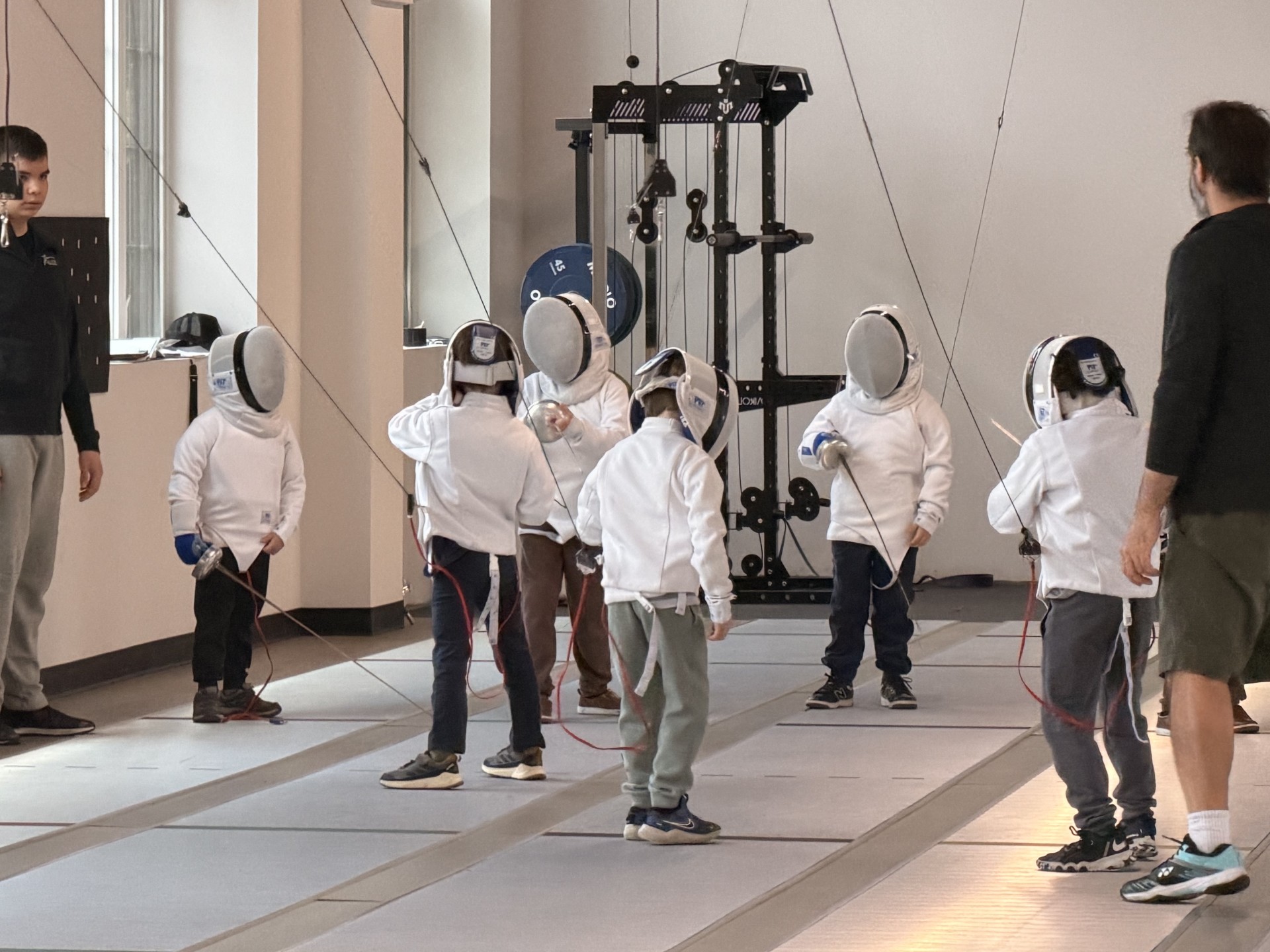
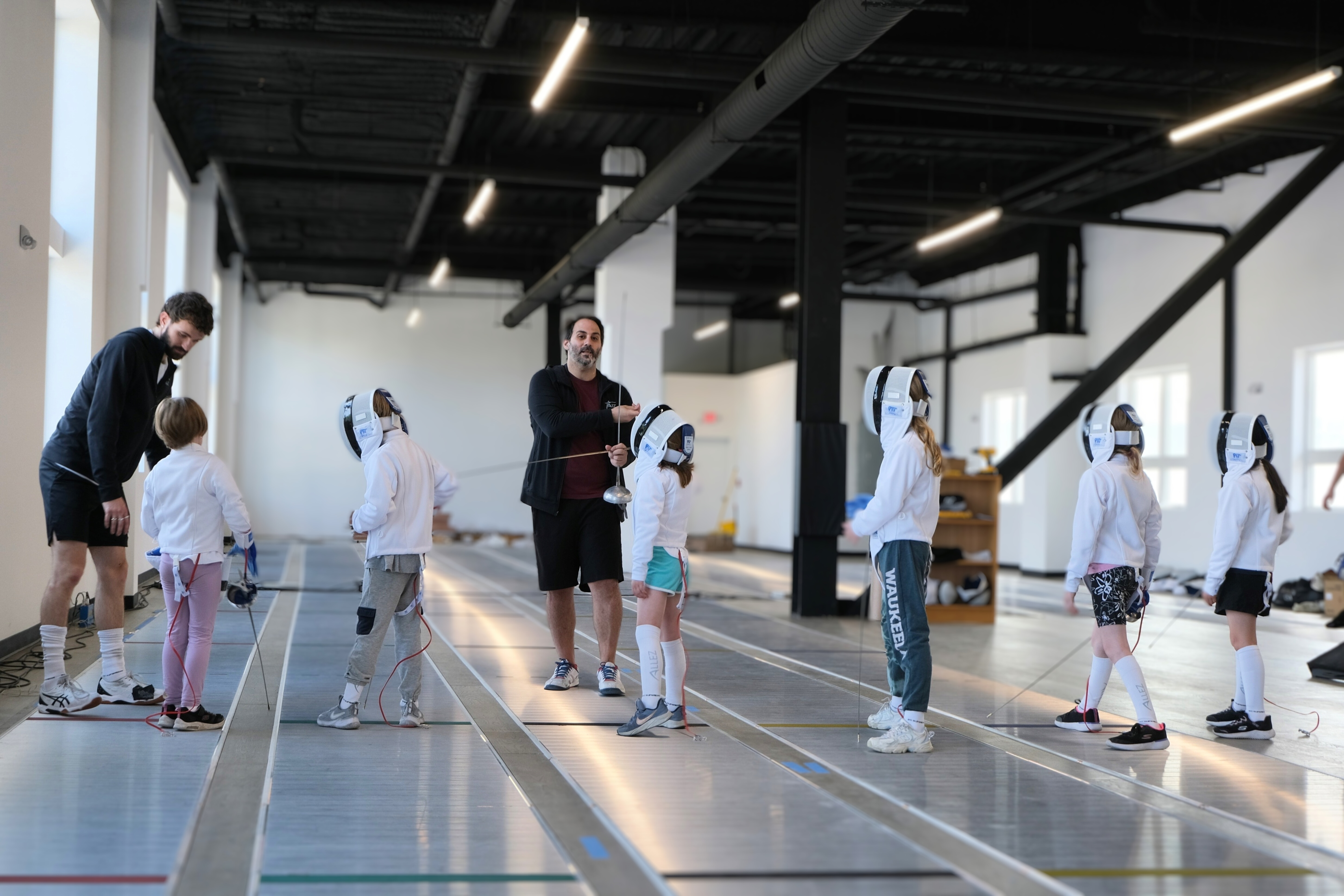
Starting a new sport can feel exciting and unfamiliar, especially when that sport is fencing. At Allez Fencing Club in Watertown, Massachusetts, we want every family to feel informed, welcomed, and confident as their child begins their fencing journey.
Fencing is more than a unique Olympic sport. It helps young athletes develop focus, discipline, athleticism, strategic thinking, and confidence. For many students, fencing becomes a place where they learn how to solve problems, manage pressure, recover from mistakes, and compete with respect.
What Makes Épée Fencing Unique
Fencing has three weapons: foil, sabre, and épée. At Allez Fencing Club, students train in épée, a weapon known for its strategic and thoughtful style.
In épée, the entire body is a valid target. Unlike foil and sabre, there are no right-of-way rules, which means the first fencer to land a valid touch scores the point. Because both fencers can hit at nearly the same time, double touches are also possible.
This makes épée both simple to understand and deeply strategic. Young fencers learn patience, timing, distance, and decision-making. They must think not only about how to attack, but also when to attack, how to defend, and how to create opportunities.
Understanding the Fencing Strip
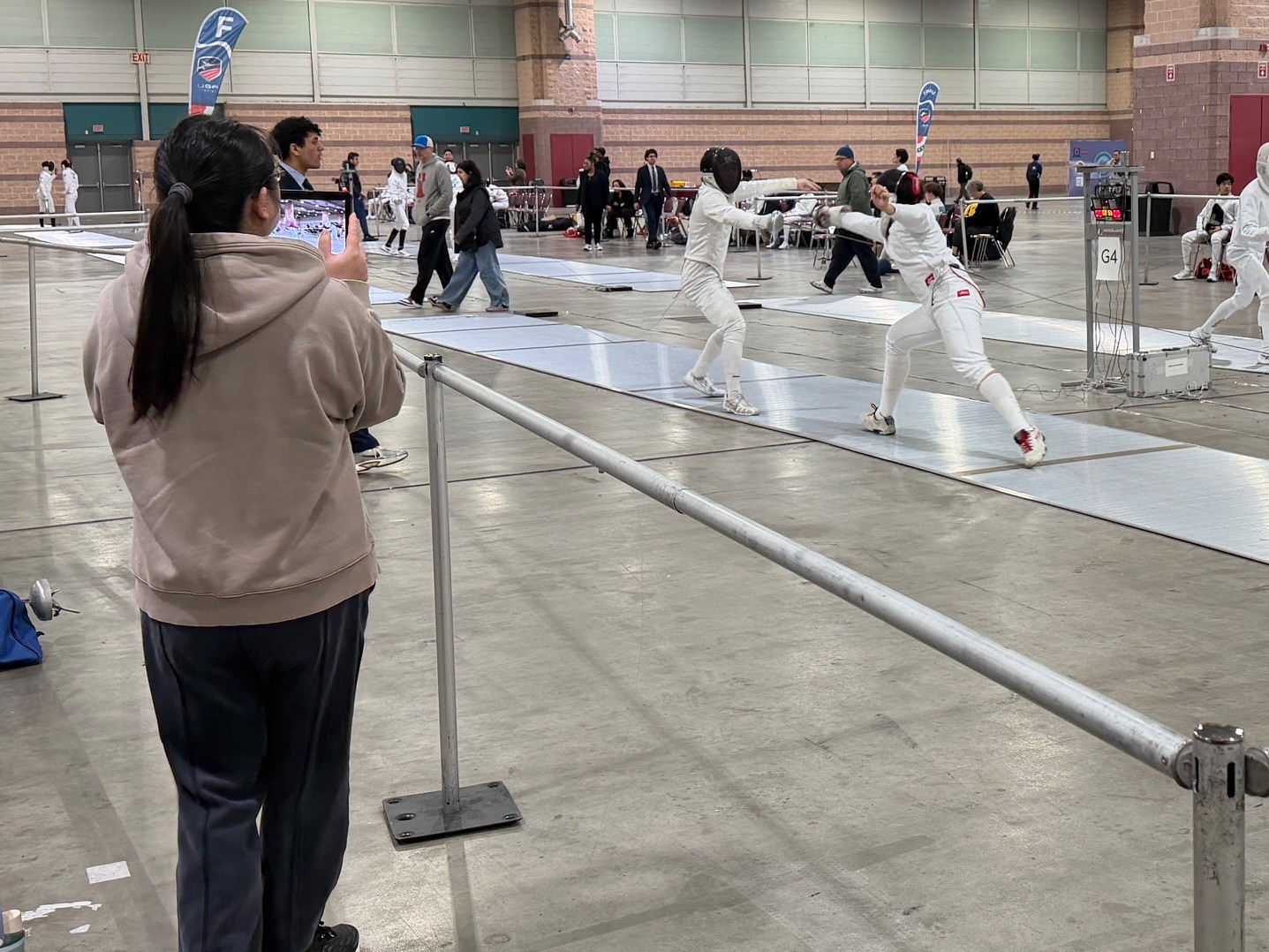
A fencing bout takes place on a long, narrow strip, also called a piste. The strip is about 14 meters long and includes several important areas, including the center line, en garde lines, warning lines, and end lines.
For new fencers, learning how to move on the strip is one of the first steps. Footwork, balance, distance, and control are just as important as blade work. Over time, students begin to understand how positioning on the strip shapes the flow of the bout.
What Students Need for Class
For regular classes, students should come prepared with comfortable athletic clothing. Sneakers or court shoes, long athletic pants, a T-shirt, and a water bottle are recommended.
During class, the club typically provides the fencing-specific equipment students need, including a fencing jacket, plastron, chest protector, épée mask, glove, body cord, and weapon. This allows new students to begin learning without needing to purchase a full set of equipment right away.
Preparing for Competitions
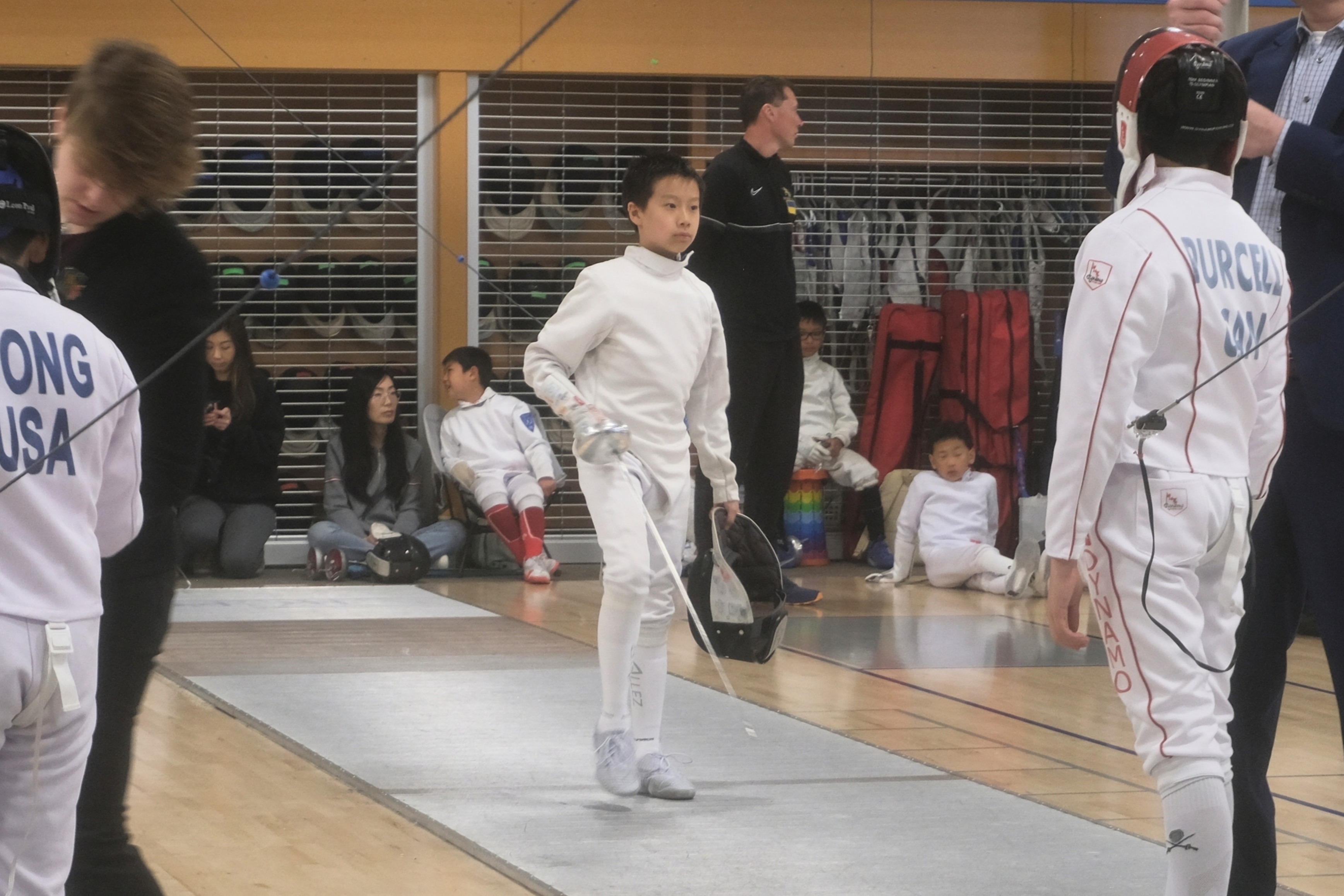
As students progress, they may become interested in fencing tournaments. Competitions require a more complete set of personal equipment, including a fencing jacket, plastron, fencing knickers, knee-high socks, fencing shoes or court shoes, épée mask, glove, weapon, backup weapon, body cord, and backup body cord. Chest protectors are required for girls and younger fencers.
It is also helpful to bring snacks, water, extra socks, a warm-up jacket, a towel, and a fencing bag. Tournament days can last several hours, so preparation makes the experience much easier for both fencers and parents.
For younger fencers, blade size may also vary by age group. Y10 fencers often use a shorter #2 blade, while Y12 and older fencers typically use the standard #5 blade.
How Fencing Tournaments Work
Most youth fencing tournaments include two main parts: pools and direct elimination.
The pool round is a small round-robin group, usually made up of five to seven fencers. Each fencer fences everyone else in the pool. These bouts are typically fenced to five touches or three minutes.
After pools, fencers are placed into a direct elimination bracket. These bouts are longer and are usually fenced to 15 touches or three three-minute periods. In this stage, the winner advances and the other fencer is eliminated from the bracket.
For parents new to fencing, this format may feel unfamiliar at first, but it becomes easier to follow after watching one or two events.
What to Expect on Tournament Day
Tournament day usually begins with check-in. Families should plan to arrive about one hour before the event starts. Fencers will check in at registration, show their USA Fencing membership, complete equipment inspection, warm up, and locate their pool assignment and strip number.
When a bout begins, the referee calls both fencers to the strip, checks equipment, and asks the fencers to salute. The bout then begins.
Parents can support their child by helping them stay calm, hydrated, and focused. The most important thing is to encourage learning and effort, not just results. Every tournament is an opportunity to gain experience.
Basic Fencing Terms Parents Should Know
A bout is a fencing match. A touch is a point scored. A double touch happens when both fencers score at nearly the same time. A pool is the round-robin stage of the competition. A tableau is the direct elimination bracket. The strip is the fencing piste where the bout takes place.
Parents may also hear referees issue cards. A yellow card is a warning. A red card gives the opponent one point. A black card results in disqualification from the event.
Helpful Resources for Fencing Families
There are several websites that families may use as their child becomes more involved in fencing. AskFRED is commonly used for local tournaments and clinics. USA Fencing is used for membership and national tournament information. FencingTimeLive is often used for tournament results, pool assignments, strip assignments, and event updates.
These resources can feel overwhelming at first, but families become more comfortable with them over time.
The Allez Fencing Club Philosophy
At Allez Fencing Club, our goal is to help young athletes build strong fundamentals, strategic thinking, confidence, and a love for the sport. We believe in a positive training environment and long-term athlete development.
Fencing is a sport that rewards patience, discipline, and resilience. Some days, a young fencer may win. Other days, they may struggle. But each practice and each bout offers a chance to learn.
For new fencing parents, the best thing you can do is encourage effort, celebrate progress, and remember that development takes time. At Allez, we are proud to support every student as they grows as both a fencer and a person.